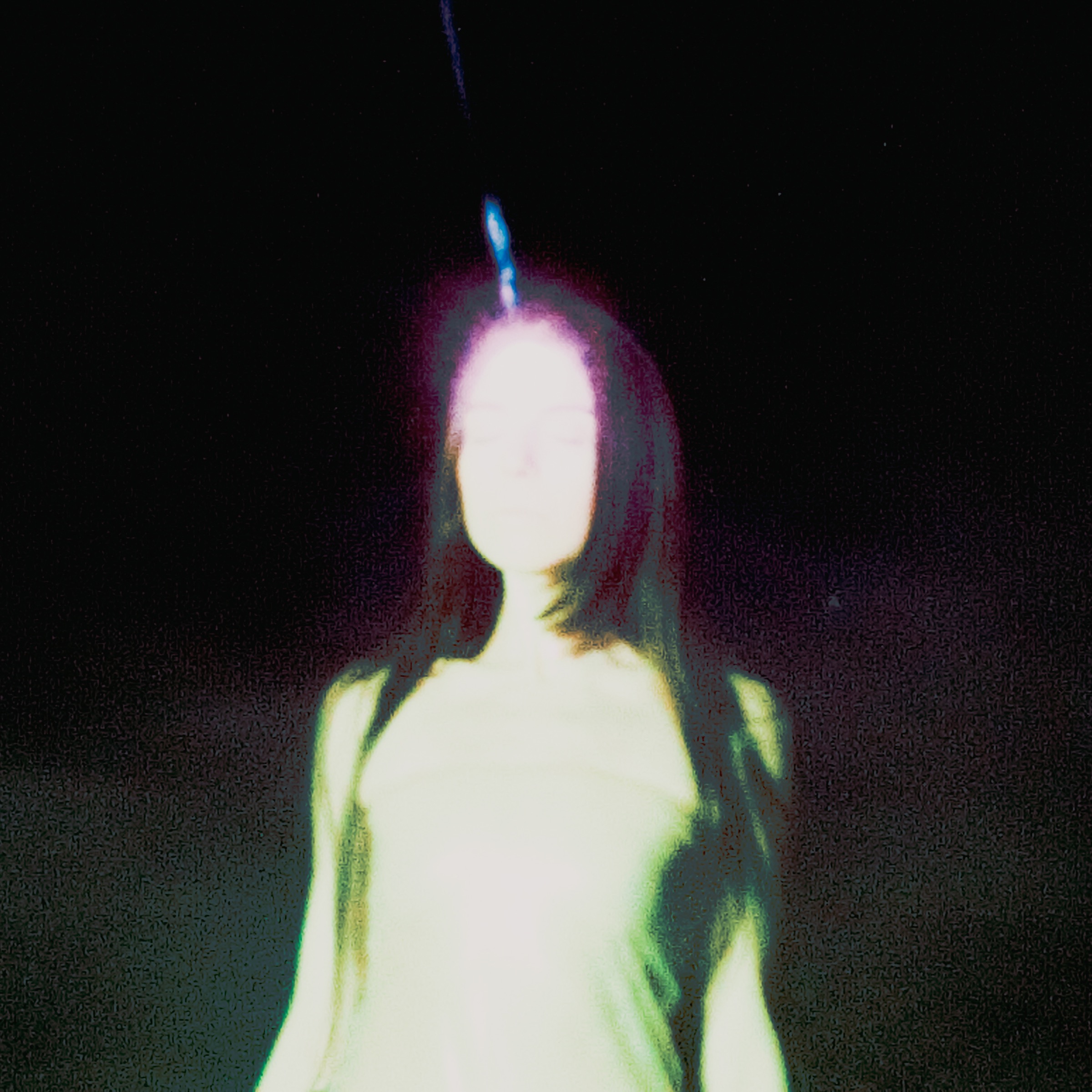
Nina is excited to exclusively present CANTICO, the new album from the Italian artist Yoniro, which is a moniker of the creative director Laura Petrucci. The record is a stirring synthesis of contemporary production techniques and creative methods inspired by Taranta, a ritualistic Southern Italian folk music. We had a long conversation with Petrucci about everything from the conceptual underpinnings of the record—she schools us on Taranta—to her collaborative process and the relationship between her audio and visual work. Read the piece, and listen to CANTICO, below.
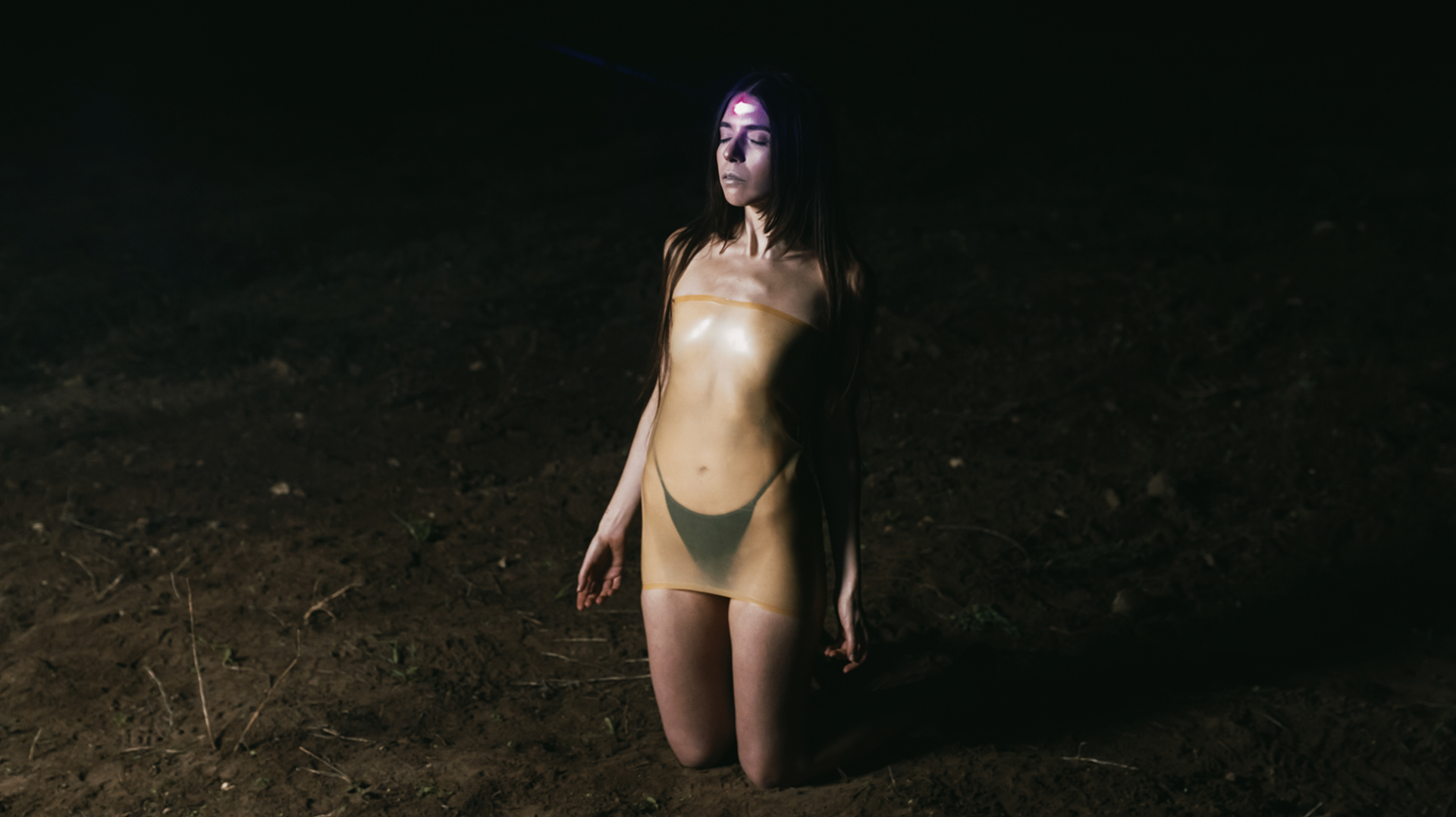
YONIRO - CANTICO
Q&ATalking to the Italian artist about her new record, which is exclusively on Nina.
By editorial
2026/03/23
- 1Simài
- 2Noto
- 3Naka
- 4Vloo
- 5Ajarai
- 6Klidi
- 7Jali
- 8Asimi
- 9Ji
- 10Ijo
- 11Oli mia
Could you talk a bit about the tradition of Taranta and how it is incorporated into your larger musical and artistic practice?
The Taranta is a musical and ritual tradition from Southern Apulia, historically associated with trance, healing, and the transformative power of rhythm. What draws me to it is not only its sound, but the symbolic world around it: repetition, altered states, bodily release, and music as a force that can shift perception. In my practice, I’m not interested in quoting tradition in a literal or folkloric way. I’m not interested in using Taranta as an aesthetic reference, but in understanding its internal logic and translating it through my own language. What enters my
work is its ritual dimension: the tension between control and abandonment, the circularity of rhythm, and the idea of sound as something that can transform both body and space. So rather than treating Taranta as something fixed to be preserved unchanged, I see it as a living vocabulary—something that can still move, mutate, and speak through contemporary forms.
On your new record, there is a negotiation between tradition and more forward-thinking musical ideas. What are some strategies for negotiating this tension?
I’m not interested in “updating” tradition, but I’m also not interested in preserving it as something pure or untouchable. Both approaches can become rigid. What interests me is keeping its force intact while letting the form mutate. So the strategy is never to use traditional elements as decoration, or experimental ones as a sign of progress. I try to make them meet at a deeper structural level—through repetition, tension, release, texture, and vocal presence. When it works, it doesn’t feel like two aesthetics being forced together, but like one language finding its shape.
What function do the shorter interludes serve on this record?
The shorter interludes are essential to the album’s sense of continuity. I see them less as transitions and more as thresholds—moments that open, suspend, or redirect the listener’s attention. They help the record unfold as a continuous narrative, where not everything needs to be carried by lyrics. At times, words step back so that atmosphere, texture, memory, and sensation can take the lead. Each interlude plays a specific role within that movement: “Simài” works as an invocation, “Vloo” as a first gesture of stillness and reception, “Klidi” as a rhythmic key, and “Ji” as a more inward moment of sedimentation and emotional recomposition. For me, they hold some of the album’s most subtle transformations. They let the record breathe and make space for a form of storytelling that happens not only through language, but through sound, presence, and emotional atmosphere.
How does your visual work inspire your musical work, and vice versa?
I don’t really see my visual and musical work as separate parts of my practice. They evolve together. For me, creation is about building a medial body with a full spatial dimension, where sound, image, texture, performance, and atmosphere all belong to the same world. Everything begins with research. Usually that process starts through reading, inner reflection, and conceptual exploration, and from there it unfolds into different forms. In the case of this album especially, the visual development was fundamental—not as something added afterwards, but as part of the work’s formation from the beginning.
In my practice, musical and visual research may move along different paths at first. Musically, I’m drawn to experimental and electronic languages, but also to classical and contemporary structures. Visually, my work is shaped by fashion, performance, feminist languages, and technology. But those trajectories eventually merge, because they are rooted in the same conceptual inquiry. What emerges is a layered perceptual world, where different media do not simply support one another, but resonate from the same conceptual core.
You live and work between Australia and Italy. How do those two countries inform the music you make?
They inform my music very deeply, because my work is always autobiographical in some way. I don’t experience Italy and Australia as two abstract influences, but as two environments that have shaped my inner life, my imagination, and the way I relate to memory, ancestry, and identity. Living in Australia expanded my world a lot. It made me feel more connected to ancestral dimensions, but it also widened my perception, my taste, and my sense of possibility. It gave me a different kind of mental and creative space—a quietness that, for me, can be much harder to find in Italy. A big part of the first writing phase of the album happened there, at the beginning of 2025, and that atmosphere really entered the record.
There are also very concrete traces of that presence in the album. “Ijo,” for example, was born from a painting by a Western Australian artist that I encountered while I was writing, and the image of reversed light stayed with me. But Australia also brought me into a deeper reflection on family, migration, and what gets carried across generations. My ancestors moved from Greece to Southern Italy, and later my family continued that trajectory into Australia. That history is deeply present in the album, especially in the final track, “Oli mia,” where I speak more directly to that lineage.
What’s your favorite way to start a track?
My favorite way to start a track is by first understanding what I need to speak about. Once I find that inner core, I begin gathering material around it—through reflection, reading, images, documentaries, and all kinds of stimuli. I usually carry that process for a long time, sometimes months, without forcing it too much. I set an intention and let it mature. That wasn’t always my process. In the past, songs often arrived very suddenly, especially melodies, which would come to me in that state between sleep and wakefulness. I still value that instinctive dimension, but over time my writing has become more refined, especially through working with my producer Salvatore Versace. Exploring new methods together has taught me how to care for a song more deeply without losing its authenticity. So even when a track eventually appears in a very light or intuitive way, it is usually carrying a long inner and conceptual preparation behind it.
How did your collaboration with Salvatore Versace come about?
We first connected on Instagram while I was stuck in Australia during the border closures. Salvatore reached out about working together, and it felt almost absurd because we’re both originally from Salento, in Puglia, yet we had never managed to collaborate when we were actually living there. I had been looking for someone who could really understand my world - something deeply tied to electronic music, but also faithful to my core identity—and I hadn’t found that before. Since 2020, we’ve kept working together, and that collaboration has become a very important part of my process. I’m very selective and detail-oriented, so for me collaboration only works when the other person has a strong language of their own, but can also see something in you that you can’t fully see yourself yet. I think this album is probably the clearest expression of that dynamic so far.
What kind of music has been exciting you lately?
Honestly, lately my listening habits have been pretty chaotic. I’ll go from not wanting to hear anything at all to suddenly fixating on one completely random track for days. My recent listens are all over the place: Opus III’s “It’s a Fine Day,” Mozart’s Requiem in D Minor, Kayla Trillgore’s “Crash,” Hans Zimmer’s “Now We Are Free,” Pauline Oliveros, Valentina Goncharova, Sussan Deyhim, BONES. There’s no real logic to it, which is probably the logic. At this point I think I just like music that does something to my nervous system.