You had two poets perform at the album release party. The lyrics on this album also read as very poetic to me. Were there writers that inspired the writing process?
One through my friend Naz was a poet named Frank Stanford. He's really amazing. I'd say Raymond Carver. Short story, author guy. I feel like they just understand the weight of association. I have a good friend named Danielle, and we had a conversation the other day. She actually played the release show. We both kind of talked about how we feel like words kind of have a utilitarian thing. There's a purpose to them. But then also, words are emotional objects. And I think if you understand that words have an emotional charge, then when you put them next to each other, they can be a doorway to a feeling. And I feel like both those authors understand the balance between the utilitarian purpose of language and the emotional charge and kind of inanimate object element of words.
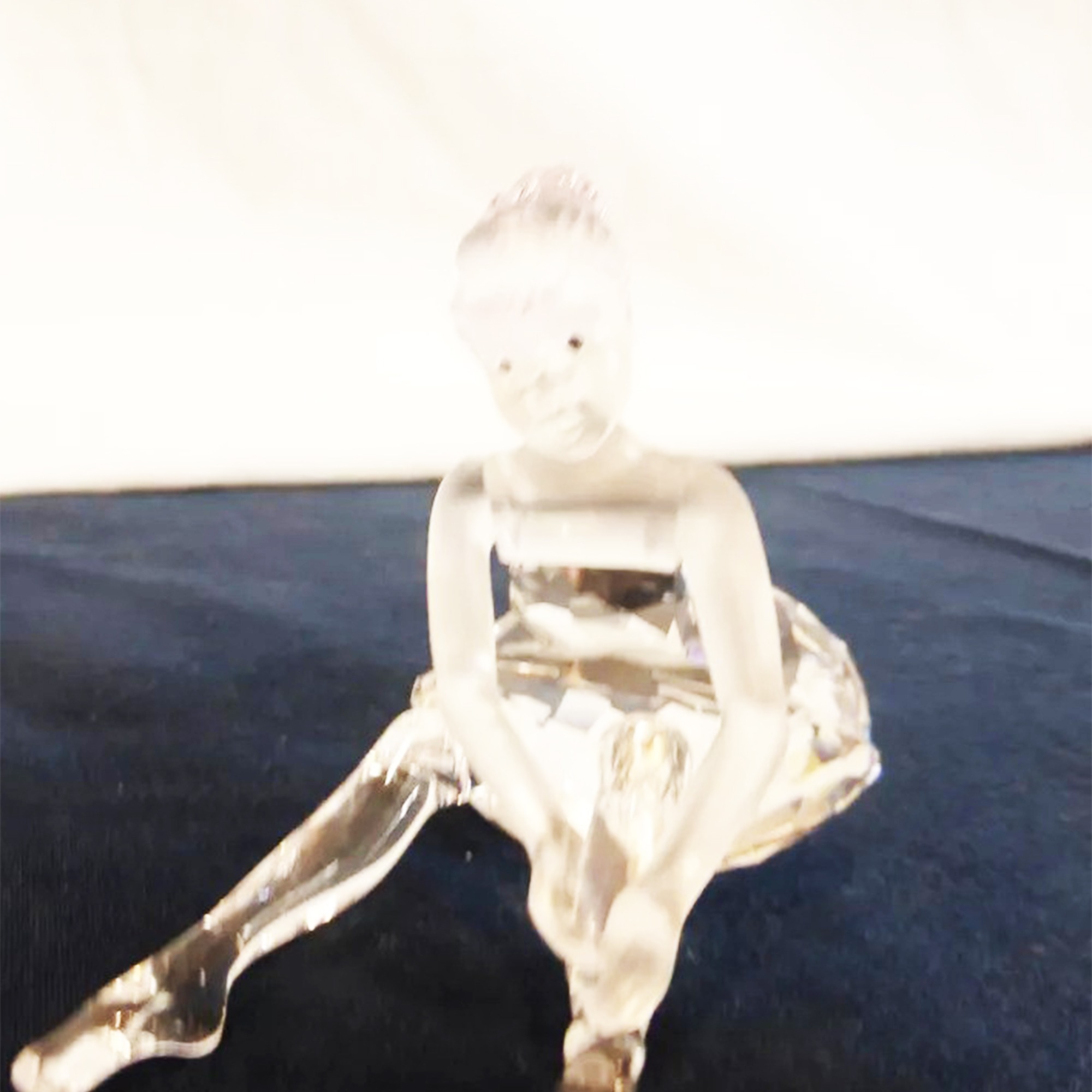
Most of your covers feature figurines. Why is that?
If I had to try to boil it down, there's something about projecting or anthropomorphizing inanimate objects. I think all the dolls I use just look sad to me. There's a humanness to them. It’s like you're looking at them, but you're also kind of like looking through them, because there's nothing there. It's an imitation of, like a human form.
This has been driving me nuts—what’s the instrument at the beginning of “Here I Stand?”
It’s a guitar, but it’s run through something I used in Logic for a lot of stuff on this record, which is called delay designer. You can map out the steps of the delay. You can also map out the changing of the notes. So what you’re hearing is just the delay of those two notes, arpeggiating. We do it with two guitars, which was Dan [Howard]'s idea.
Speaking of Dan, the album very much feels like one of those records where the studio was an instrument. What was the process of recording and producing the album with Dan like?
It was awesome. Most of the songs started with a demo I made on my laptop. So, that loop was something I made on my laptop, and it was really Dan's idea to keep parts of the demo in the actual recording. Yeah, yeah, yeah. Most of the songs are a kind of collage between his studio in Williamsburg and my demos. I think it became kind of a sonic characteristic of the record, because there are these really lo-fi feeling elements, and then there's these really hi-fi drums and other ending guitars and whatnot. I think we really grew as collaborators. I learned to trust him more. Now we've started working on the next one, and I feel like I trust him more than ever. Especially with the response that this is getting, it's put a real fire under our ass.
Can you list the moments that are demos on each song?
“Here I Stand,” it's definitely the loop. And then “No Cameras.” That main sound, I made that with the same thing in Logic. “I got God,” it's the main looping thing. “Keep Me Around” was a weird one, because that was from an original batch of songs we worked on before we started working on the record. And Dan brought it back up later, being like, This demo is really good. And I listened to it again before it had any vocals on it. And I was like, Oh, my God, I cannot believe we made that. That’s way better than I remember it being. But the drum sounds in the beginning are from the demo. What else? The drum machine on that track is from my home demo.
“Arcades,” the big synth sound. On “Blur,” it's the lead guitar line, all this stuff too. He would re-record through an amp or put it through a distortion box. “You were solved.” The synth lead-up. That was a home demo. The drum beat is based off of a drum sample I chopped up. “Beach death” was something we did completely in the studio. I feel like you can kind of tell with that one. I added some tape hiss. “Fits” was, I mean, that's a whole other conversation, but a lot of that is the home demo, a lot of those looping samples, the crazy, noisy guitar. The last song, “I’ll Show You Mine,” I think it was nothing.
The press materials describe Victoryland as your project. What is Victoryland to you?
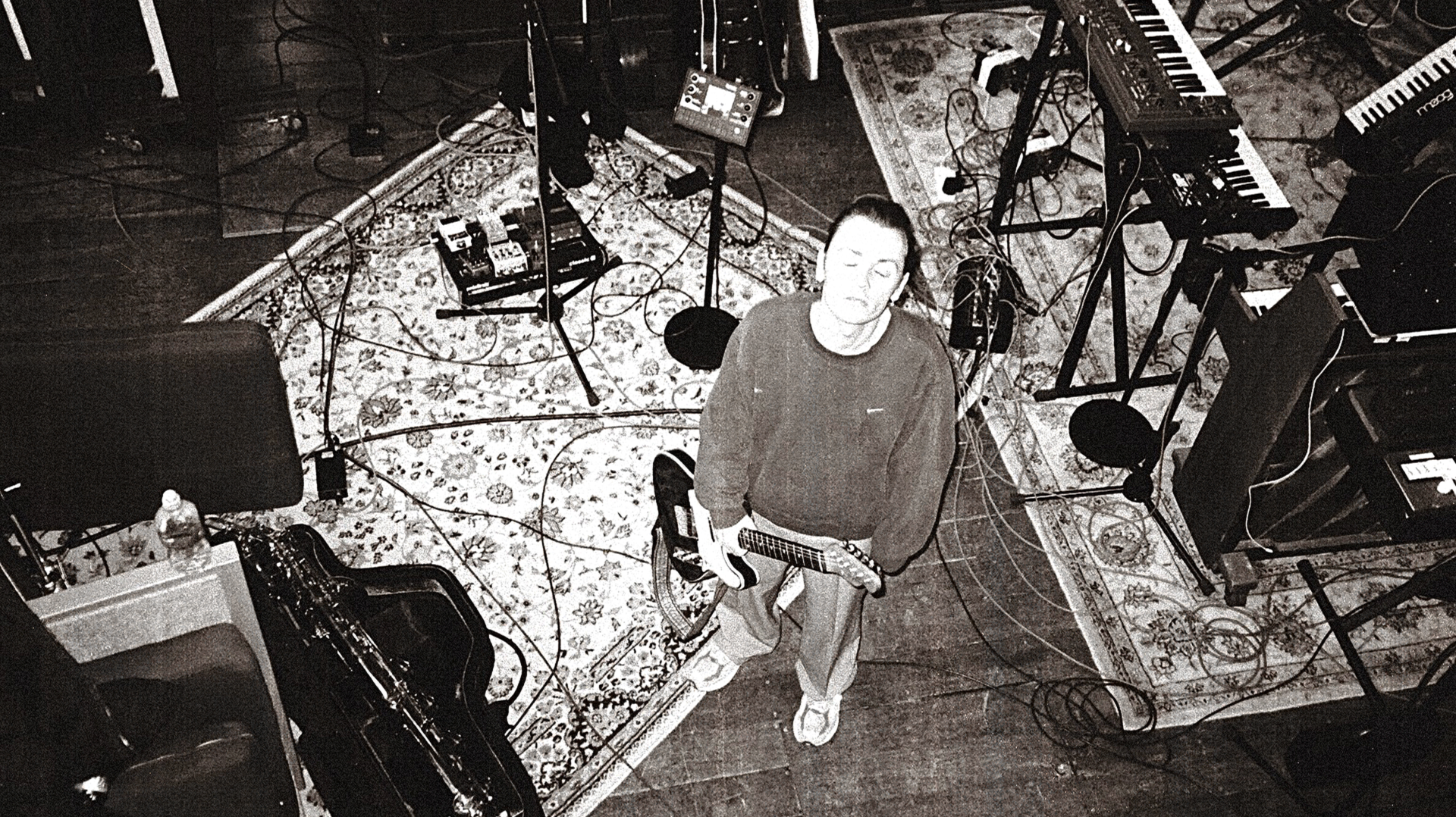
Victoryland is really 50/50, me and Dan, especially this record. I think I'm just more the front person. That’s the vibe we're trying to give off. With Dan, he doesn't really care about having his picture taken. I’m much more shallow in that way. I want the notoriety or whatever. But the live show is like a six person band. It's a big situation, and it's really sick. I feel like we really captured the vibe of the record. I think part of maturing as a musician is realizing that if you copy paste from the recording to live, it doesn't always translate. There's been a lot of work on our part to try to translate it live, and I think we did a really good job.
I’m also interested in a lot of different forms of art. Victoryland is definitely a musical project. It's not gonna become a filmmaking company. But if I had to put words to it, it's a vessel for expression. Music is amazing, and it's what I want to spend my life doing. But I also think you can kind of chip at the same cosmic thing with different art forms. First and foremost, it’s a recording project between Dan and I. But I've never felt like I was in a band that was the complete package. And now, for the first time in my life, I do feel that way.