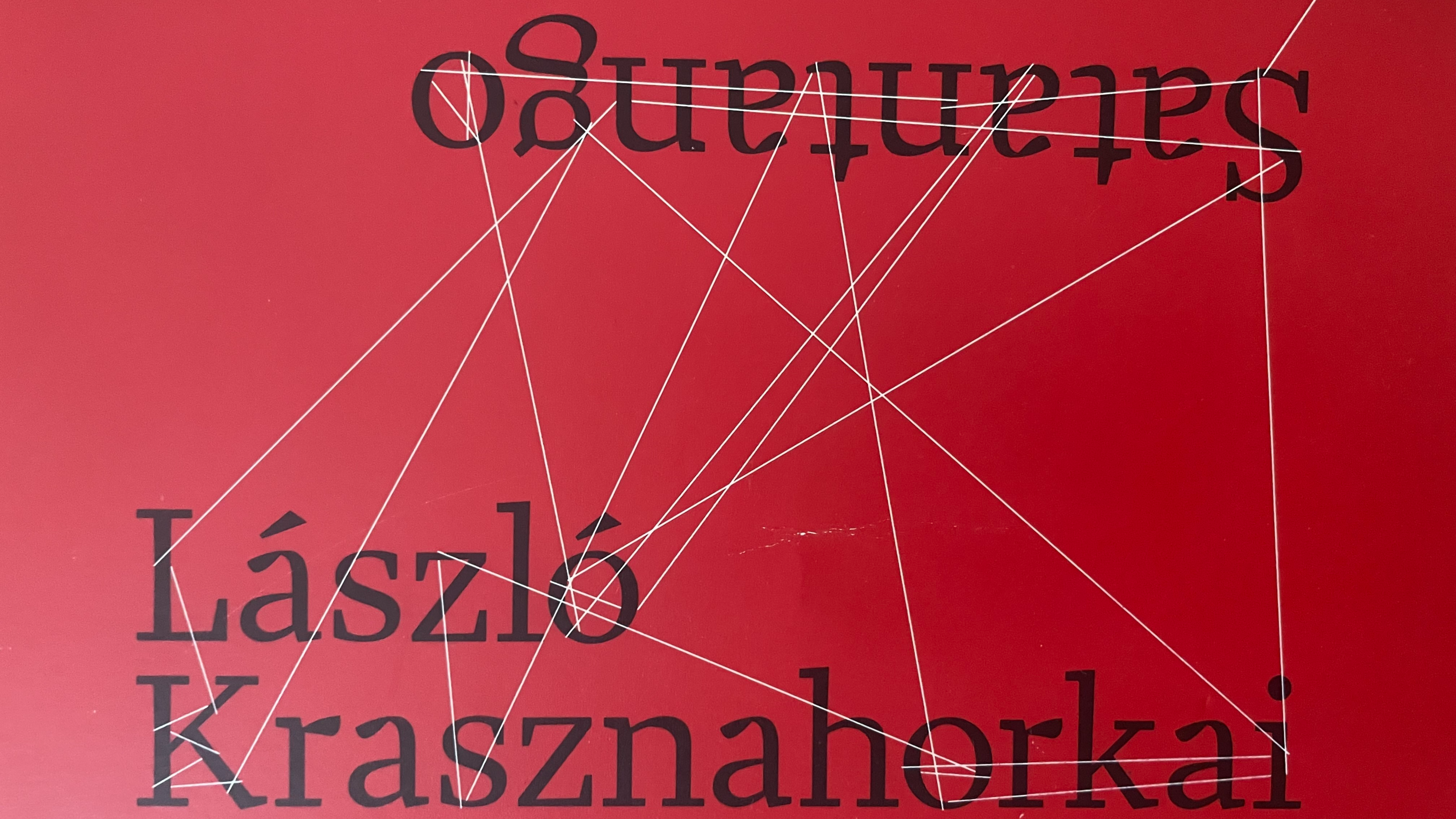
This post was originally published as an installment of my newsletter, Grey Fiction.
The first Laszlo Krasznahorkai novel I read was Seiobo There Below, his 2008 epic about the titular Japanese goddess traveling through space and time to witness the creation of the world’s great works of art. I had been out of college for less than a year when my then-girlfriend gave me a copy of Ottilie Mulzet’s recent English translation for Christmas. I finished it within the week, swallowing multiple of its fifty-plus page single-sentence chapters whole per day. Even though most of the book details the painstaking mechanical procedures of various traditional art practices, its tone and atmosphere bore an apocalyptic essence that I could only think to compare to extreme metal music.
At this time I was still occasionally using the microblogging platform Tumblr, mostly to monitor a few accounts that I thought properly synthesized my particular niche interests: hyperlocal music scenes, radical political theory, vintage mysticism and pseudoscience, obsolete analog technology, and literature. With Krasznahorkai’s voice still echoing in my head, I plugged his name into the site’s search bar to see what it might turn up in this particular space. Most of the results came from the book’s publisher, New Directions, or publications covering his recent titles, but one, about a dozen or so down, came from an account I had never seen before. Its handle was “MelancholyVoidHU,” and the post included just a picture of a group of young men in denim and leather posing in a forest clearing and the caption “Laszlo Krasznahorkai with Ördögtánc in 1982.”
I was thrilled, but somewhat skeptical. The man in the background with the wispy goatee and the frayed jean jacket did have the same intensity in his eyes as the portraits I’d seen of the skulleted older gentleman who might have been Dracula’s father, and nothing about the book I had just read made it seem unlikely to have been written by a former metal musician. Still, based on what I knew about the history of metal music, it couldn’t have been very big in Hungary in the early 80s, where listeners would often have had to pick up a bootleg cassette abroad or intercept a radio broadcast from Austria to be able to hear it in the first place.
Trying to verify MelancholyVoidHU’s claim would prove similarly complicated; the Internet could reach pretty far in the Tumblr era, but not quite as far as the Brezhnev-era Eastern Bloc power metal samizdat trade. The best source for independent researchers looking into claims about obscure European metal bands was Encyclopaedia Metallum, the fan-built, crowdsourced database which has been moderating its nearly 200,000 unique HTML pages for over two decades. I was disappointed, but not surprised, to find not only that no band called Ördögtánc was listed, but that out of over 1,500 bands from Hungary, only three were active in 1982 in Budapest, where Krasznahorkai would have been living and studying at Eötvös Loránd University.
I reached out to MelancholyVoidHU several times to ask where the picture had come from, but never received a response. I also never received a response to the email I sent New Directions inquiring about the source of the claim. I continue to monitor Encylopaedia Metallum, Discogs, and any other potential online source for some record of Ördögtánc, but for all I know, the band met once for one rehearsal and the only known picture is the private property of MelancholyVoidHU, who is either a former friend of the band, another former member, or Krasznahorkai himself. That, or someone saw something online, thought of a funny story to tell about it, and left someone else wondering over ten years later whether it was ever true in the first place.