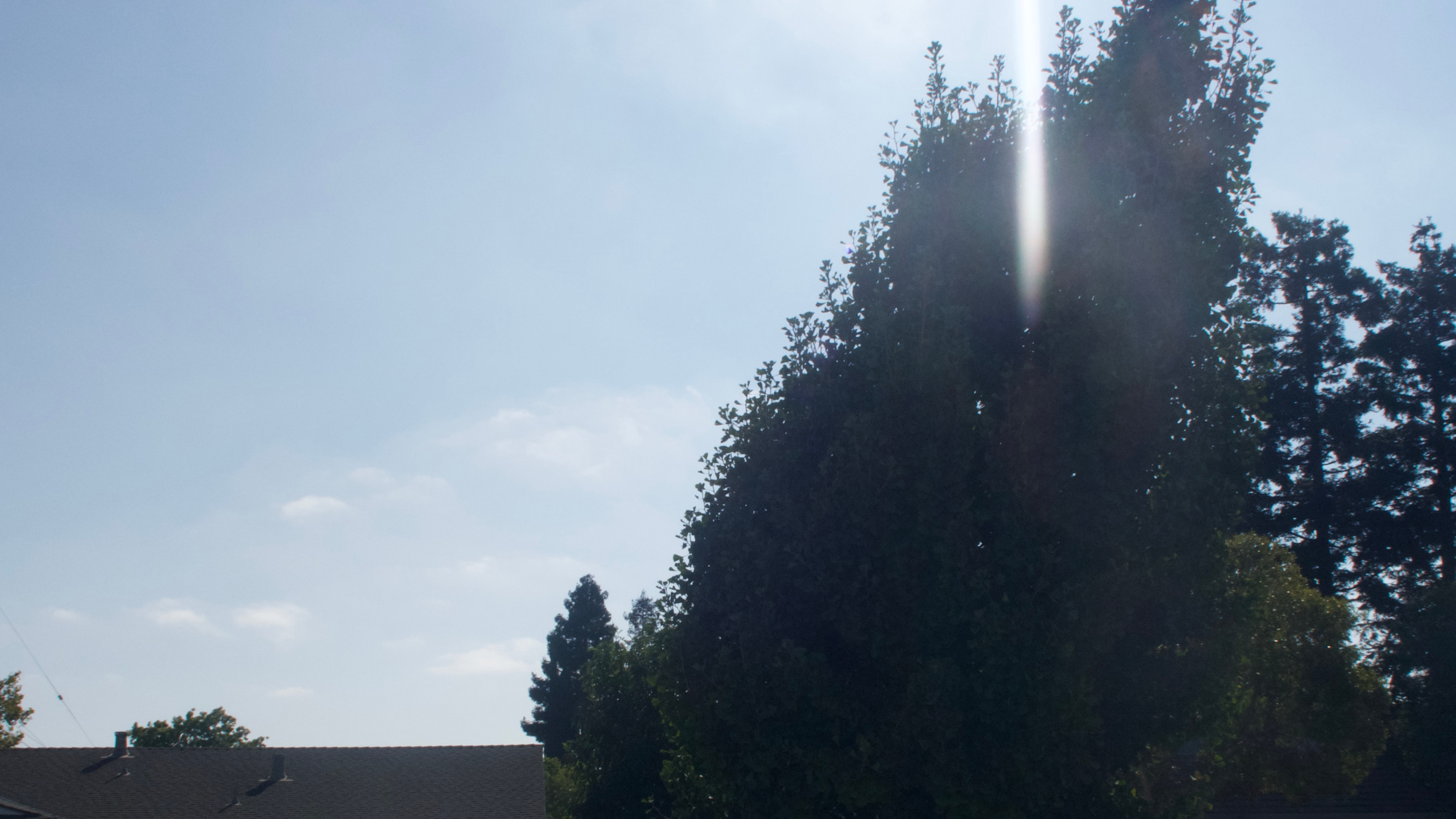
I slow my cadence and pull over on the side of the narrow sidewalk, the side closest to the street. Walls of snow building on the ground. These walls guard me from falling off the edge of the sidewalk.
Here it is: the ginkgo tree. Typically, this would be one the few species of trees that my colorblind eyes could recognize the specific characteristics of. Typically, its body is covered with bright green leaves that you might most easily describe as a kind of handheld folding fan. But, you could also see them as little kites.
The leaf petals the face of the kite, the stem the tail. Standing here, as the gravity of the next moment pulls passerbys across the sidewalk to their coming destination, I try my best to mimic the ginkgo's stationary act. I imagine in a mental timelapse how it’s shed all of its little kites, finally giving them the chance to catch air. But through this whole time lapse–as the leaves grow, flicker, then fly–the ginkgo remains still. The gingko stands barren now, an empty fractal of airstrips.
They say that it’s kept up this similar act for around 200 million years. Since the time of dinosaurs, it’s been giving flight to these little kites–before language even existed to come up with the idea of a kite–and for the most part, they say, it’s remained exactly the same. In the infinite revolving of moments, this tree has found a way to give flight the same way for 200 million years.
The first time I really gave notice to a tree was shortly after Christmas in 1st grade. When, after driving home with a handful of presents on my lap–a lap that by law was required to sit in a booster seat–a tree fell on our car. This was the first time I learned the species of a tree. Eucalyptus. A towering thing, it positioned itself right up against the street, feeling the full weight of the air and vibrations coming off the cars.
The branch nearly split the car in half. Glass exploded onto the street and into the car, mostly hitting the back half for some reason. We managed to get out of the car okay. My sister, who was also sitting in the back with me, had cuts all along her back from the glass, but I walked out just fine. It turns out that a booster seat really does protect a child.
I notice that this ginkgo sits as far from the street as it can. Almost unnaturally, it positions itself at the side of the sidewalk farthest from the street, on a sidewalk with trees on the closest side to the street.
Shortly after the accident, we got a new car from the insurance money. It became my dad’s crown jewel: a used, 2008 Range Rover Sport. Supercharged. And after that, we cut down the big tree that used to shade over our home in the summers while I played basketball on the driveway. The tree was on the side of the sidewalk closest to the street. We replaced it with a ginkgo tree, the second tree I’ve been able to recognize, positioned on the side of the sidewalk farthest from the street.
They say there isn’t a particularly impressive way that the ginkgo's have learned to survive. It’s particularly good at taking abuse–its leaves fend off pests well and its roots can take on nearly any kind of soil. But most important to its survival has been human cultivation. In the wild, a ginkgo tree is rare. In China, it’s still relatively uncertain if the few native populations of ginkgo’s were aided by humans. Maybe a gingko hasn’t learned to survive, maybe it only stays where it’s been placed.
Yesterday, the Range Rover got keyed and egged, parked on the street outside our home, in front of our adolescent gingko tree. The tree was untouched.
Walking to my room with my partner, on the farthest side of the country from my home, I saw ginkgo leaves on the ground. We were walking in between two brick buildings, down cement stairs, and still, somehow, the leaves covered the ground. She stopped midway down the stairs and walked back up a bit, and asked, don’t these look like little kites?
I saw the little kites on the floor and thought of how they could have flown this far. And now, writing this, I think of how those little kites had flown across the country from my home. I think about how maybe my parents had planted the ginkgo so there’d be a good tree that my colorblind eyes could recognize, one they knew would stay, one they would make sure could stay.
They say that the ginkgo is a sign of hope because of its ability to last. But we’ve forgotten that it’s only lasted because we’ve given it a chance to.