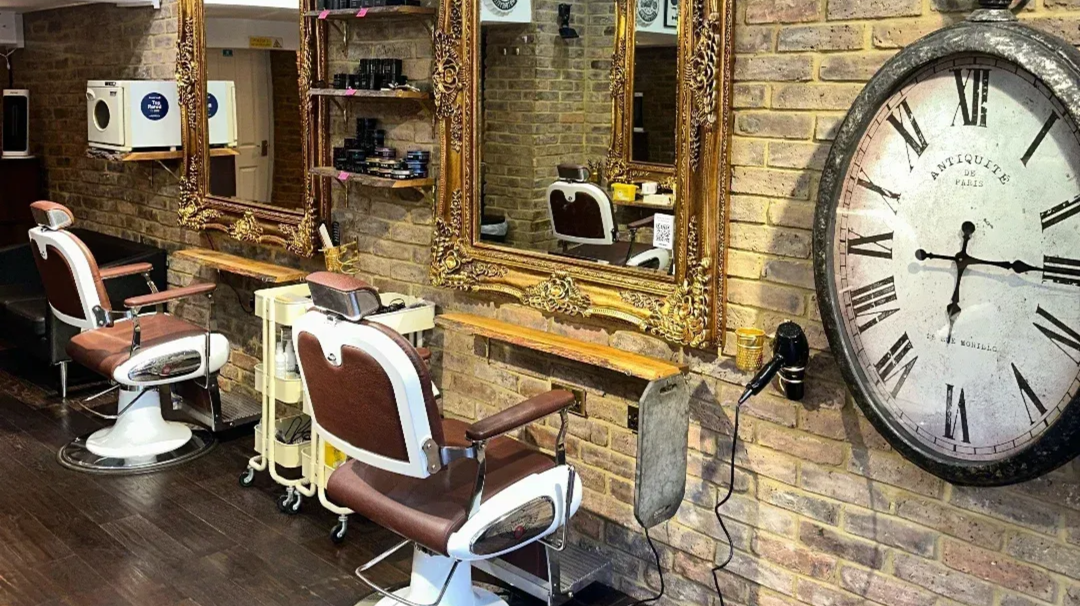
You won’t need me to tell you that the price of most things has risen massively. I used to pay £12 for a haircut in Uni, nowadays it’s more like £15-20. I have two preferred local barbers - my usual one at £15 and another which does a slightly better job for £20. I was in the £20 one this week and after the usual chat about what I’m up to at the weekend and football, I noticed the music coming from the TV in the corner of the room. I usually wouldn’t pay much attention to the music being played in the barbers, but on this occasion I looked over at the TV to find an AI-generated music video, with lyrics on screen. After a few seconds I realised the music was AI generated. Non-offensive chord progression, lyrics and vocal style which blends in as background noise, around 3 minutes in length, these are usually key markers of AI-generated music content. Those are also the key markers of a lot of pop music.
Back in 2022, I was studying at BIMM London, I wrote an essay on AI-generated music, using Drake as an example that we are all to blame for platforming and building business around self-referential ‘sameness’ that can now be automated with AI. At the time, people in my class did not believe me that music could be generated by an AI system - ChatGPT had not been released at that point.
It can be easy to overanalyse the experience of finding AI music out in the wild, in such a normalised setting as a Turkish barbers. To me, it served as proof of how convenient AI outputs are. It also reminded me how little people will actually care if AI-generated music gains an even greater market share of ‘overall music played’ worldwide. Whilst most people do care about music, the world is in a turbulent state and if the number of human artists being played in public spaces and personal libraries is diluted by robots, it will just be dismissed as ‘one of those things’ by most.
According to CISAC, up to 24% of rights holders revenue may be lost to AI taking up share of music being played worldwide. They project that in 2028 alone, £3.4 billion of royalties which would otherwise go to traditional style rights holders, will be redirected elsewhere due to AI music taking up large shares in sync libraries and streaming service catalogues.
In other news, this week, AI artist Xania Monet signed a $3 million record deal with US based Halwood Media. I’m left asking - where is that money going? An advance would usually cover living costs, production and marketing budgets - Isn’t the point of AI music lower overheads and keeping it in house? Is this a tax write off?!
Once you look into this, you find that human artist Telisha Jones’ songwriting and production is fuelling the outputs of the AI system generating Xania Monet’s work. This raises even bigger questions, a presumably talented musician is pulling the strings in the background whilst an AI gets headlines worldwide for signing a multi-million dollar record deal? Whose name is on the contract? I feel we have got this backwards.
A general sentiment in the world is to watch things happen, assuming someone, somewhere is dealing with it. This is the case a lot of the time, but the smart people you’re imagining to be on top of these things are usually not so smart after all. It will take people like you or me to drive and decide what this new stage of music will be. What the outcomes for artists, labels and listeners will be. There is no end in sight and things may change at any time.
Visual arts have had the unwelcomed housemate of AI-generated content for a few years now. Terms like hybrid imperfection and promptography describe new styles and practices which solely exist as a result of AI systems. What will be the first new style or sound which has exclusively been generated by an AI system? When looking back at the sound of the 2020s, a decade only halfway through, will Humans or AI systems take the bragging rights?
I think everything is existing in a collective state of “what the fuck” and before we get an answer, another “what the fuck” hits us in the face. Maybe this is how it’s always been, who knows.
This existential “what the fuck”-ness that I’m referring to is what we have over AI. The greater the market share AI takes, the more alarming it is, the more questions it raises, the more we can channel that into art. I’m in favour of tools which enhance creativity, but I’m not having an AI artist who doesn’t exist signing recording contracts on my behalf. I’d rather have the advance for myself, thanks.